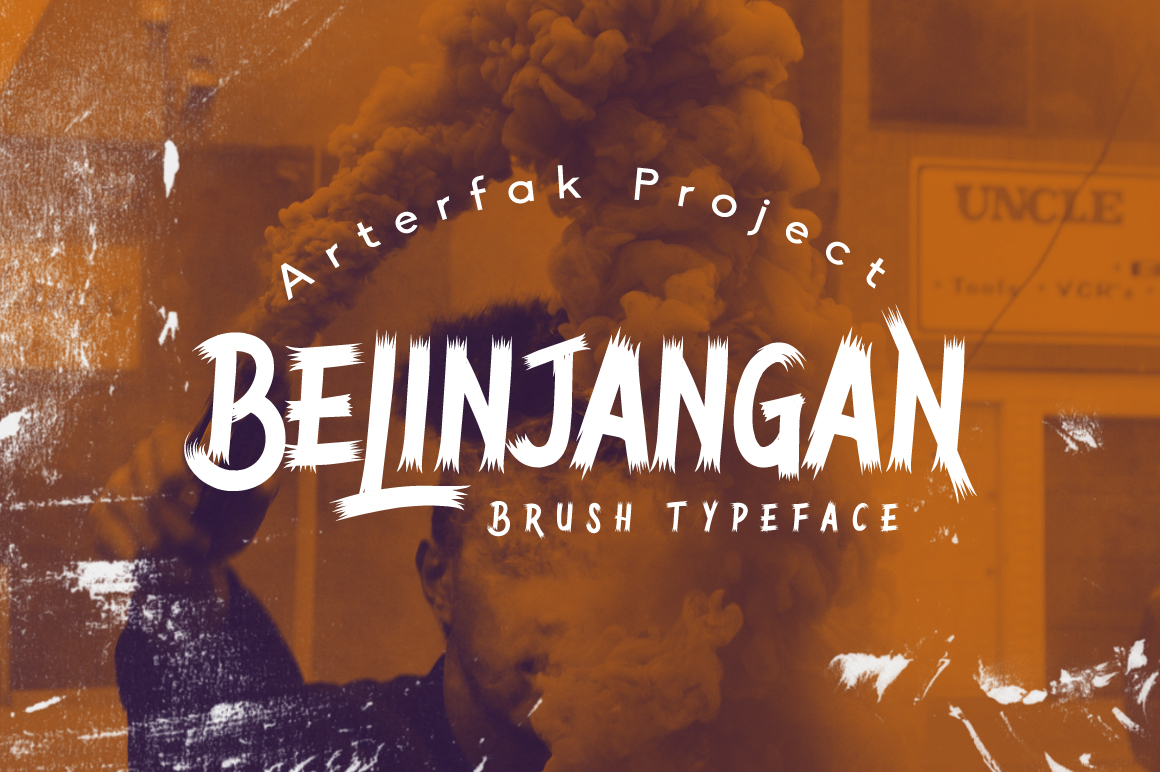
Belinjangan: A Modern Digital Brush for Contemporary Creative Workflows
In the realm of digital art and design, tools are often defined by their precision and uniformity. This can lead to a sterile aesthetic that lacks the tactile feel of traditional media. The Belinjangan brush emerges as a deliberate counterpoint to this trend. It is an experimental digital brush designed with a specific ethos: to introduce controlled organic texture into digital canvases. Its defining characteristic is a clean, predictable base stroke adorned with intentionally rough, variable edges. This unique combination places Belinjangan not as a tool for every task, but as a specialized instrument for specific phases within a broader creative or professional process.
Defining the Role of an Experimental Brush in a Process
Understanding where Belinjangan fits requires viewing creative work as a sequence of decisions and executions. For professionals—whether illustrators, graphic designers, UI/UX artists, or marketers creating visual assets—the workflow often moves from broad sketching to detailed refinement. Early stages might use loose, expressive brushes for ideation. Later stages demand precision for clean lines and shapes. Belinjangan occupies a strategic middle ground. It is not the initial brainstorming tool, nor the final pixel-perfect polishing instrument. Instead, it is applied during the development and texture application phase.
Its clean base ensures that the core shape or line you draw maintains integrity and aligns with your underlying composition or layout. This is crucial for maintaining the structural quality control of your work. The rough edges, however, instantly break the digital perfection, adding a layer of visual interest that can mimic natural wear, organic growth, hand-drawn imperfection, or stylistic grit. This allows creators to integrate a sense of authenticity or aged character into assets that are fundamentally digital, a valuable outcome for projects aiming to bridge analog and digital aesthetics.
Practical Integration into Existing Workflows
Integrating Belinjangan smoothly into your routine depends on recognizing its complementary role with other tools. It is rarely used in isolation. Consider a digital illustrator’s process. They might begin a character design using a standard round brush for rough sketches in their preferred software (like Procreate, Photoshop, or Krita). Once the basic forms are established, they switch to a more precise pen tool for clean line art. Here, Belinjangan can be introduced. Using it on a new layer over the clean line art allows the artist to add edge details—perhaps to simulate frayed cloth, weathered skin, or dusty outlines—without corrupting the underlying clean artwork. The brush interacts directly with that foundational asset, enhancing it.
For a graphic designer creating a brand motif with a "handcrafted" feel, the workflow might differ. After establishing the logo’s core geometry with vector tools in Illustrator, the designer might export the asset to a pixel-based program. There, Belinjangan can be used to selectively apply textured edges to specific elements, ensuring the brand’s visual identity remains consistent in its core form but gains unique, reproducible texture. This demonstrates how Belinjangan’s compatibility with standard digital painting and image editing platforms is key; it functions as a plugin or brush preset within a larger ecosystem.
Implementation Tips for Consistent Results
To use Belinjangan effectively, preparation regarding brush settings and canvas organization is important. Since its effect is defined by edge variation, experimenting with the brush’s scale, opacity, and flow settings relative to your canvas resolution is a necessary first step. A useful observation is that the brush often performs best at larger sizes, where the contrast between its clean center and rough periphery becomes most visually impactful.
Organization of your document layers is also critical for long-term efficiency and quality control. When applying Belinjangan’s texture, do so on a separate layer or with a layer mask. This isolates the experimental texture work from your base artwork. It allows for easy adjustment, toning down of the effect if it overwhelms the design, or complete removal without harming the primary assets. This non-destructive approach is a cornerstone of professional digital workflow and makes an experimental tool like Belinjangan much safer to implement.
Use Cases Beyond Pure Illustration
The application of Belinjangan extends into broader creative and business workflows. Educators creating digital learning materials might use it to add deliberate, engaging imperfections to diagrams, making them feel less sterile and more approachable. Bloggers and content creators crafting custom imagery for their publications can employ it to frame photos or highlight text elements, adding a consistent branded texture across their visual assets. Small business owners designing their own marketing materials can use the brush to generate textured backgrounds or border elements that convey a specific ethos—like artisanal, rugged, or vintage—without needing advanced artistic skills, thanks to the brush’s predictable base.
In these scenarios, Belinjangan interacts with decisions about brand identity and audience engagement. The choice to introduce rough edges into a business card design or website graphic is a deliberate stylistic decision. The brush becomes the implementation tool for that decision, executing the desired outcome efficiently. Its usability lies in this direct translation of a conceptual goal (“we want our visuals to feel tactile”) into a tangible result.
Managing Expectations and Long-Term Use
As an experimental tool, Belinjangan requires a mindset shift from seeking total control to embracing controlled randomness. The rough edges are algorithmically generated; they will vary each time, even with the same stroke. This is not a flaw but a feature. For long-term use, developing a familiarity with this variability is part of the process. It encourages working in batches: if you need consistent textured elements for a project, create them all in one session to ensure the algorithmic "seed" for the roughness produces a cohesive family of textures.
Efficiency with Belinjangan comes from knowing when to use it and when not to. It is not suitable for creating fine detail within the core of a shape, nor for smooth gradients. Its value is perimeter-specific. Therefore, integrating it smoothly into your routine involves creating a personal toolkit or brush preset library where Belinjangan is categorized alongside your precision tools and your blending tools. This organizational step ensures you select the right instrument for the right task during the pressure of a project.
Outcomes and Process Enhancement
The ultimate outcome of incorporating a tool like Belinjangan into your workflow is an expansion of your expressive palette. It provides a method to systematically break the sometimes monotonous perfection of digital media. This can lead to final products that stand out for their character, potentially increasing engagement for marketers, deepening narrative feel for illustrators, or strengthening brand identity for entrepreneurs.
Its process-oriented nature means it doesn’t redefine the entire workflow but enhances a specific stage within it. By slotting into the phase between base creation and final detailing, Belinjangan offers a focused opportunity to inject organic quality. For the productivity-minded user, this represents a valuable, time-efficient specialization: a single tool that addresses a common aesthetic gap without requiring a suite of complex filters or manual, time-consuming drawing techniques.
In practice, Belinjangan reminds us that digital creation is a series of choices. Choosing to apply texture is one. Choosing the right tool to apply that texture in a controllable, repeatable, and high-quality manner is another. This experimental brush, with its clean core and ragged edges, is designed to be that specific choice, fitting neatly into the modern creator’s sequenced approach to planning, execution, and practical implementation of visually compelling work.