Understanding Melly Script: A Modern Calligraphy Tool for Elegant Designs
In the landscape of digital typography, where designers seek fonts that convey personality and sophistication, modern calligraphy scripts occupy a distinct niche. Among these, Melly Script has emerged as a notable option for projects requiring a touch of handwritten elegance. It's not just another cursive font; it's a carefully crafted typeface designed to bridge the gap between traditional calligraphic artistry and contemporary digital design needs.
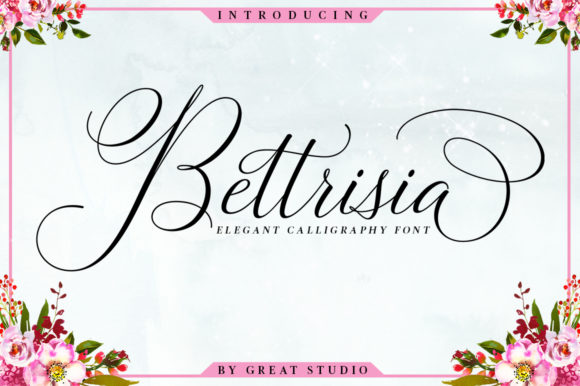
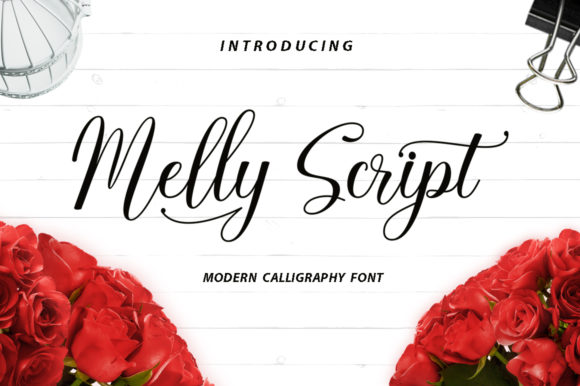
What makes Melly Script distinct is its foundation as a modern calligraphy script. This means it draws inspiration from the fluid strokes of hand-lettering but is engineered for consistency and scalability in digital formats. Its core character set is built with a balanced rhythm, offering clear readability even at smaller sizes, which is a common challenge with more ornate scripts. The defining feature, however, is its extensive set of beautiful swashes. These are the graceful, extended flourishes on certain letters, particularly beginnings and endings, that provide that signature elegant touch. These swashes are optional alternates, allowing designers to toggle between a more standard letterform and a decorative one, giving precise control over the level of embellishment.
Key Characteristics and Design Philosophy
The design philosophy behind Melly Script appears focused on versatility within a specific aesthetic. It avoids the extreme thin strokes and fragile connectors found in some formal scripts, opting for a more robust weight that holds up well in print and on screens. The letterforms themselves possess a friendly, open quality, softening the potential rigidity of a digital font. This makes Melly Script feel less like a rigid historic reproduction and more like a contemporary artist's stylish handwriting.
When evaluating a script font, considering its language support and technical execution is crucial. Melly Script typically includes comprehensive glyph sets, supporting multiple languages and offering the necessary punctuation and numerals that blend seamlessly with its style. This technical robustness is a significant practical advantage. You aren't just getting a beautiful 'A' and 'Z'; you're getting a full toolkit for composing complete sentences and headlines that maintain a cohesive look.
Comparing Melly Script to Similar Font Categories
To understand where Melly Script fits, it's helpful to compare it broadly to other categories of script and handwritten fonts. Unlike many bold brush scripts, which prioritize a rugged, energetic feel, Melly Script leans towards refinement and grace. Its strokes are more controlled, its atmosphere more serene. Conversely, when compared to traditional copperplate or Spencerian script fonts, Melly Script is decidedly less formal and complex. Those historical styles demand specific stroke contrast and intricate detailing, while Melly Script offers a simplified, modern interpretation that is easier to deploy across diverse media.
Another relevant comparison is with the vast array of casual handwritten fonts. These fonts often mimic quick, everyday penmanship with irregular baselines and varying letter shapes to achieve authenticity. Melly Script, while handwritten in spirit, offers a higher degree of uniformity and polish. This makes it a more reliable choice for professional branding where consistency is paramount, whereas a truly casual script might be better suited for projects aiming for an informal, DIY aesthetic. The tradeoff here is between authentic irregularity and designed consistency.
Practical Applications and Best-Fit Situations
The advertised use cases for Melly Script—logos, product packaging, wedding invitations, branding headlines, and more—are accurate, but understanding the nuances of each can help you decide if it's the right tool. For logos and branding, a script font becomes part of a company's visual voice. Melly Script, with its elegant swashes, can convey qualities like creativity, care, and premium quality. It would be a strong candidate for brands in beauty, artisan goods, wedding planning, or boutique hospitality. However, for a brand needing to communicate robustness, extreme tech innovation, or austerity, a script like Melly would likely be a mismatch.
In the context of wedding invitations and event signage, script fonts are often the default choice. Melly Script sits in a valuable middle ground here. It is more distinctive and modern than many common, overused invitation scripts, yet it remains legible and appropriately festive. Its swashes can be used to beautifully frame names or dates. For a wedding with a contemporary, stylish theme, Melly Script could be an excellent fit. For a very traditional, vintage-themed wedding, designers might look towards scripts with more period-specific details.
Product packaging and labels present a different challenge: space is often limited, and legibility under practical conditions is key. Melly Script's relatively clear base letterforms help here. Using the standard characters without swashes on smaller text, like ingredient lists or taglines, can maintain the elegant feel while ensuring readability. The swashes can then be reserved for the primary product name on the label, creating a hierarchy of elegance.
For book covers, posters, and quotes, the font needs to work at larger sizes and carry emotional weight. Here, Melly Script's swashes can truly shine, creating dynamic visual interest and leading the eye across the composition. It competes in this space with many other display scripts. Its advantage is its modern calligraphy foundation, which may feel more current and accessible than scripts that are overly dramatic or theatrical.
Evaluating Strengths and Potential Limitations
Every typeface involves tradeoffs, and a balanced evaluation of Melly Script requires acknowledging both its strengths and scenarios where it might not be the ideal choice.
A primary strength is its controlled elegance. It offers decorative flair without being overwhelming. The availability of both standard and swash glyphs gives designers a dial they can adjust, making it adaptable from a subtle accent font to a prominent display face. Its modern character also means it doesn't feel dated or tied to a specific historical period, broadening its applicability across contemporary projects.
Another strength is its likely technical completeness as a digital font file. Features like multiple language support, alternates, and consistent kerning (spacing between letters) are essential for professional work and are often where free or poorly constructed script fonts fail.
Potential limitations naturally arise from its very specific style. First, it is unequivocally a display typeface. It is not designed for, and should not be used for, long bodies of text like website articles or book chapters. Its decorative nature and connected letters would severely hinder reading fluency in paragraphs. Second, while its modern calligraphy style is versatile, it may not possess the specific character needed for certain themes. Projects requiring a rustic, masculine, childlike, or ultra-minimalist tone would likely find a better fit elsewhere.
The use of swashes also requires designer discretion. Overuse, or using swashes in contexts where they clash with neighboring elements, can make a design feel cluttered rather than refined. This isn't a flaw of the font itself, but a consideration for the user; the powerful tool requires thoughtful application.
When Melly Script Is the Right Choice
Melly Script may be the right choice when your project's core message aligns with qualities like elegance, creativity, personal touch, premium quality, and contemporary style. It is particularly well-suited when you need a script that feels handcrafted but not informal, and when you have a mix of applications—like a logo, a headline, and a label—that require the same font to perform slightly different roles. The alternates between standard and swash forms allow for this versatility within a single typeface family.
It is also a strong option when you are looking to avoid the most common, ubiquitous script fonts. By choosing a modern calligraphy script like Melly Script, you can achieve a distinctive look that stands apart from default choices without venturing into overly niche or difficult-to-use typefaces.
When to Consider Other Options
You should actively consider other options if your project requires extensive paragraph text setting. In such cases, a complementary serif or sans-serif font for the body text, paired perhaps with Melly Script for headlines, would be the correct approach. The script itself should not carry the bulk of the textual content.
Also, if the aesthetic you are aiming for is far outside the realm of elegance and grace—for example, seeking a gritty, industrial, or starkly minimalist feel—then a script font, including Melly Script, is probably not the starting point for your typography. Similarly, for projects rooted in a specific historical era (like a Victorian-style poster), a script font with more period-accurate detailing would be more appropriate than a modern interpretation.
Finally, from a purely practical standpoint, if your budget only allows for free fonts, you will need to explore the extensive marketplace of free script typefaces. While you may find options with a similar feel, they often lack the glyph completeness, technical polish, and commercial licensing peace of mind that a professionally developed font like Melly Script provides. The tradeoff involves weighing project importance, longevity, and required professional polish against cost.
Making an Informed Decision
Choosing a typeface is a significant design decision. When evaluating Melly Script, move beyond simply viewing it in a font previewer. Test it in your actual design environment. Create mock-ups of your logo, your invitation layout, or your packaging label. Experiment with using the swashes on key words and the standard forms on supporting text. Assess its legibility at the sizes you truly need. Compare it side-by-side with other script options you are considering, focusing on the subtle differences in letterform shape, stroke weight, and overall mood they convey.
Remember that a font like Melly Script is not just a collection of letters; it's a tool with a specific personality. Its strength lies in its ability to inject a modern, elegant, handwritten character into a design system. By understanding its distinct place within the spectrum of script typefaces, its best-fit applications, and its inherent tradeoffs, you can make a more confident and informed choice for your creative project.