Discovering Rosty: The Unique Typeface for Distinctive Design
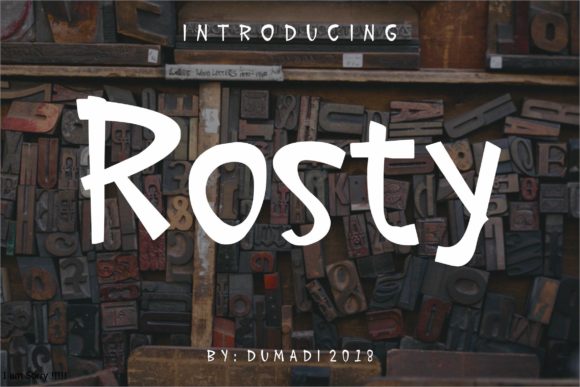
In the crowded visual landscape of digital and print media, finding a way to make your work stand out is a constant challenge. One of the most powerful, yet often overlooked, tools for creating a unique identity is typography. Enter Rosty, a strikingly original typeface characterized by its irregularly shaped letters. Rosty isn't just another font to add to your library; it is a deliberate design statement. Its unconventional forms break away from the predictable geometry of many modern typefaces, offering designers a tool to inject personality, creativity, and a memorable touch directly into their projects.
The Challenge of Visual Differentiation
Whether you are designing a brand identity, crafting a promotional poster, developing a website, or creating packaging, the primary goal is often to capture attention and communicate a specific tone. A common hurdle is relying on familiar, safe typefaces that fail to convey uniqueness. This can result in designs that feel generic, blending into the background rather than commanding focus. The need is clear: a visual element that serves as a cornerstone of distinctiveness, something that embodies creativity without sacrificing communicative clarity.
This is precisely where Rosty offers a solution. Its inherent irregularity is its greatest strength. Each letter in Rosty possesses a hand-crafted, almost artistic quality, with variations in stroke weight and form that avoid rigid uniformity. This means your text itself becomes a graphical feature, carrying visual interest and a bespoke feel that pre-designed graphics or stock imagery cannot replicate. Rosty addresses the core need for a foundational design element that is inherently attention-grabbing and unique.
Practical Applications and Creative Outcomes
Using Rosty effectively requires understanding its character and applying it to contexts where its personality enhances the message. It excels in roles where display and impact are paramount.
Brand Identity and Logotype Design
For startups, boutique businesses, creative agencies, or personal brands looking to establish a memorable identity, Rosty can be transformative. Using Rosty for a logotype or primary brand name instantly sets a tone of innovation, artistry, and confidence. It suggests a brand that is not afraid to be different. The outcome is a logo that is difficult to forget and easy to recognize, fostering stronger brand recall.
Promotional and Editorial Headlines
In magazines, websites, posters, or social media campaigns, headlines are your first and most crucial hook. Rosty applied to primary headlines or key pull-quotes demands reader engagement. It moves beyond simple information delivery to become part of the visual experience, making promotional materials feel more like curated art pieces and less like templated advertisements. The outcome is higher visual engagement and a more profound connection with the content.
Packaging and Product Design
On product packaging, a typeface can communicate the product's essence before a customer reads a single word. Rosty is ideal for products aiming to communicate craftsmanship, uniqueness, or a bold personality—think specialty foods, craft beverages, artisan cosmetics, or tech gadgets with a creative edge. The outcome is packaging that stands out on a crowded shelf and communicates quality and intentionality through its typography alone.
Implementing Rosty: Recommendations and Considerations
To harness Rosty’s power without compromising readability or design cohesion, a strategic approach is key.
First, consider Rosty primarily as a display font. Its irregular shapes are best used for headlines, titles, logos, and short, impactful text blocks. For longer body copy, pair Rosty with a more neutral, highly readable sans-serif or serif font. This pairing creates a dynamic hierarchy: Rosty captures attention, and the supporting font ensures comfortable reading.
Second, be mindful of context and tone. Rosty’s irregularity conveys creativity, boldness, and a human touch. It is less suited for projects requiring extreme formality, traditional authority, or minimalistic austerity. It shines in contexts that welcome a playful, artistic, or avant-garde spirit.
Third, leverage its uniqueness sparingly. Sometimes, using Rosty for just a single key word or the initial letter of a paragraph can create a powerful, stylized anchor point without overwhelming the entire design. This approach can be particularly effective in digital interfaces where clean usability is still a priority.
How Different Users Approach Rosty
The application of Rosty will naturally vary depending on the designer's specific field and goals.
Brand Designers will likely see Rosty as a core identity asset. They may explore custom letter combinations or integrate its forms into broader brand motifs, ensuring the typeface’s character permeates the entire visual system.
Digital UI/UX Designers might use Rosty more tactically. They could apply it to hero section headers, feature names, or special call-to-action buttons to break the monotony of standardized UI fonts and create memorable moments within an app or website journey.
Print and Editorial Designers may use Rosty to define the visual voice of a publication. It could become the standard font for feature titles, giving each article a distinctive, curated entry point while maintaining a consistent typographic theme across issues.
Artists and Illustrators integrating text into their work might treat Rosty as a drawn element itself. They could manipulate its forms further, blending letters with illustrations or using them as compositional shapes, pushing the boundaries of the typeface’s already artistic foundation.
The Outcome: A Design with a Unique Touch
Ultimately, incorporating Rosty into a design project is a decision to prioritize distinctive character. The outcome is work that feels intentionally crafted, not generically assembled. It moves away from the commonplace and towards the memorable. Rosty provides not just a set of letters, but a partner in creativity. Its irregular shapes challenge the designer to think of text as a primary visual element, opening doors to layouts, compositions, and brand feelings that more rigid typefaces cannot inspire.
By focusing on Rosty’s application to solve real design challenges—like brand differentiation, engagement capture, and tone communication—you leverage its true value. It becomes more than a font; it becomes a strategic tool for achieving a unique touch. In a world saturated with visual noise, that unique touch is not just an aesthetic choice; it is a competitive advantage.